
Dental Crowns, Bridges and Dentures in Abu Dhabi: Which Restoration Is Right for You?

Losing or damaging a tooth brings up a question most patients have not had to think about before: which restoration actually fixes it? Crowns, bridges, dentures, and implants all solve a version of the same problem, but they work in different ways, suit different situations, and come with different trade-offs on cost, longevity, and what happens to the teeth around them.
There is no single right answer for everyone. There is a right answer for your specific case, and getting there means understanding what each option actually involves.
This guide sets out each restoration in plain terms, where it tends to be recommended, and how they compare against one another, so you can have a more informed conversation at your consultation.
Dental Crowns: Restoring a Single Damaged Tooth
A crown is a custom-made cap that fits over an existing tooth, restoring its shape, strength, and appearance while leaving the natural tooth root in place underneath. Crowns are typically recommended when a tooth is too damaged for a filling to hold, whether from a large cavity, a fracture, or significant wear, but the root and remaining tooth structure are still healthy enough to support a cap.
Modern crowns are commonly made from zirconia or porcelain, both of which are shaded to match your surrounding teeth closely enough that a well-fitted crown is difficult to pick out from the natural teeth beside it.
A crown generally requires two visits: one to prepare the tooth and take an impression or scan, and a second to fit the finished crown once it has been made. With reasonable care, a crown is a long-lasting restoration, though like any dental work it can eventually need replacement.
Dental Bridges: Replacing One or More Missing Teeth Using Neighbouring Teeth
A bridge replaces one or more missing teeth by anchoring a false tooth, or several, to the natural teeth on either side of the gap. The supporting teeth are shaped to hold crowns, and the replacement tooth or teeth sit fixed between them, closing the gap in a single, non-removable piece.
Bridges tend to be recommended where the teeth either side of the gap already need crowns for their own reasons, or where a patient prefers a fixed solution but is not a candidate for an implant, whether due to bone health, cost considerations, or personal preference.
The trade-off is that the supporting teeth must be prepared and reshaped to hold the bridge, which is healthy tooth structure being altered to support the restoration. A bridge is generally quicker to complete than implant treatment, since there is no waiting period for the jawbone to heal around an implant post.
Dentures: Replacing Multiple or All Teeth, Removably
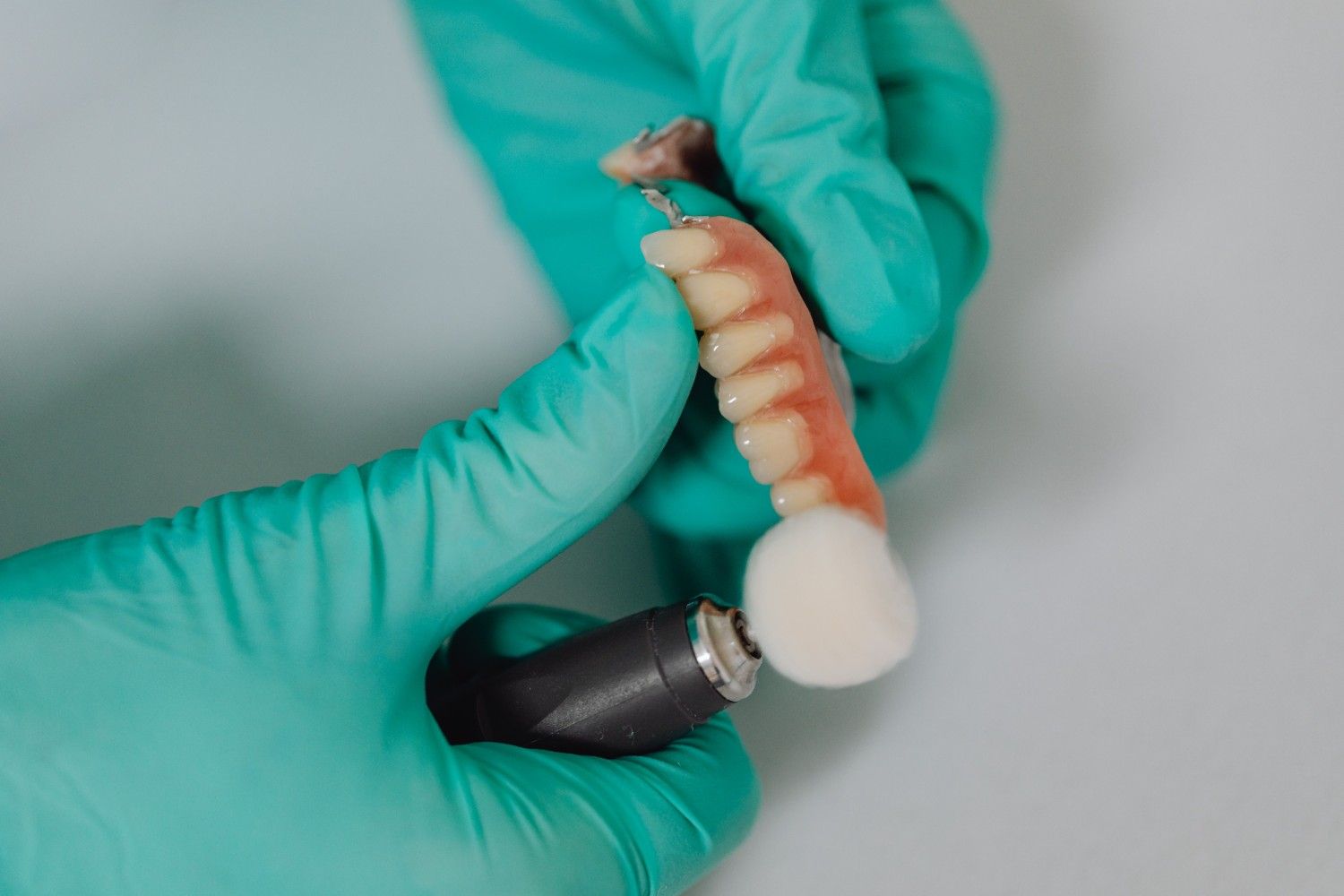
Dentures replace multiple missing teeth, or a full arch, with a removable appliance that rests on the gums. Partial dentures fill in gaps where some natural teeth remain, while full dentures replace an entire upper or lower arch.
Dentures are usually the most accessible option in terms of cost and do not require any healthy teeth to be prepared or altered, which is a genuine advantage for patients who want to avoid touching their remaining natural teeth.
The trade-off is stability. Because dentures rest on the gum rather than being anchored to a tooth or an implant, they can shift slightly during eating or speaking, and most patients need a short adjustment period to get used to wearing them.
Over time, as the underlying jawbone naturally changes shape, dentures may need relining or adjustment to keep fitting well. For patients missing a full arch who want more stability without full implant treatment, implant-supported dentures offer a middle option, clipping onto a small number of implants for a more secure fit than a conventional denture alone.
Dental Implants: The Fixed, Root-Level Option
A dental implant replaces a missing tooth at the root level, with a titanium post placed into the jawbone and a custom crown fitted on top once healing is complete. Because the implant is anchored directly in the bone rather than relying on neighbouring teeth or resting on the gum, it functions and feels closest to a natural tooth of any of the options here, and unlike a bridge, it does not require any healthy adjacent teeth to be altered.
Implants generally involve a longer overall treatment timeline than a crown or bridge, because the jawbone needs time to fuse with the implant post before the final crown is fitted, and they typically represent a higher upfront cost than a bridge or denture.
For patients who are good candidates, that additional time and cost is offset by not touching the surrounding healthy teeth and by the stability of a fixed, bone-anchored restoration. Whether an implant is suitable depends on factors including bone density at the site, gum health, and general health, which is why we assess candidacy individually before recommending it.
Comparing the Options at a Glance
- Crown: for a single damaged tooth that still has a healthy root; leaves neighbouring teeth untouched; moderate cost and timeline.
- Bridge: for one or more missing teeth where a fixed, non-removable solution is wanted; requires preparing the neighbouring teeth; quicker than implant treatment.
- Denture: for multiple or all missing teeth; the most accessible option and requires no alteration of remaining natural teeth; removable, and may need periodic adjustment.
- Implant: for a missing tooth where a bone-anchored, standalone restoration is preferred; does not affect neighbouring teeth; longer treatment timeline and higher upfront cost, offset by long-term stability for suitable candidates.
None of these options is universally “better” than the others; each answers a different combination of what is missing, what condition the surrounding teeth and bone are in, and what the patient prioritises between cost, timeline, and how the restoration should feel and function.
How We Help You Decide
At your consultation at Perfect Smile Dental Centre, we look at what is actually happening in your mouth, the condition of any remaining teeth, your bone health where relevant, and what matters most to you, whether that is speed, cost, or long-term stability, before recommending a direction.
It is common for a treatment plan to combine more than one of these restorations across different teeth, rather than applying a single solution throughout the mouth.
We will also always flag where preventive care, such as keeping up with routine check-ups, can extend the life of whichever restoration you choose.
Frequently Asked Questions
How long do crowns, bridges, dentures, and implants typically last?
Each option has a different typical lifespan, and how long any of them lasts depends heavily on individual care, bite forces, and general oral health. We discuss realistic expectations for your specific situation at consultation rather than quoting a single figure that applies to everyone.
Can I switch from dentures to implants later?
In many cases, yes, provided there is sufficient bone at the site, which we would assess with a scan. Some patients start with dentures and move to implant-supported options later; this is a decision to make with your dentist based on your bone health and goals at the time.
Do bridges damage the teeth next to the gap?
The supporting teeth need to be shaped to hold the bridge’s crowns, which is a permanent alteration to those teeth. It is a well-established and generally safe technique, but it is worth understanding as a trade-off compared with an implant, which does not involve the neighbouring teeth at all.
Will my dentures look natural?
Modern dentures are shaded and shaped to closely resemble natural teeth and gums, and most patients find they look natural in daily wear. Fit and comfort are usually the bigger adjustment than appearance.